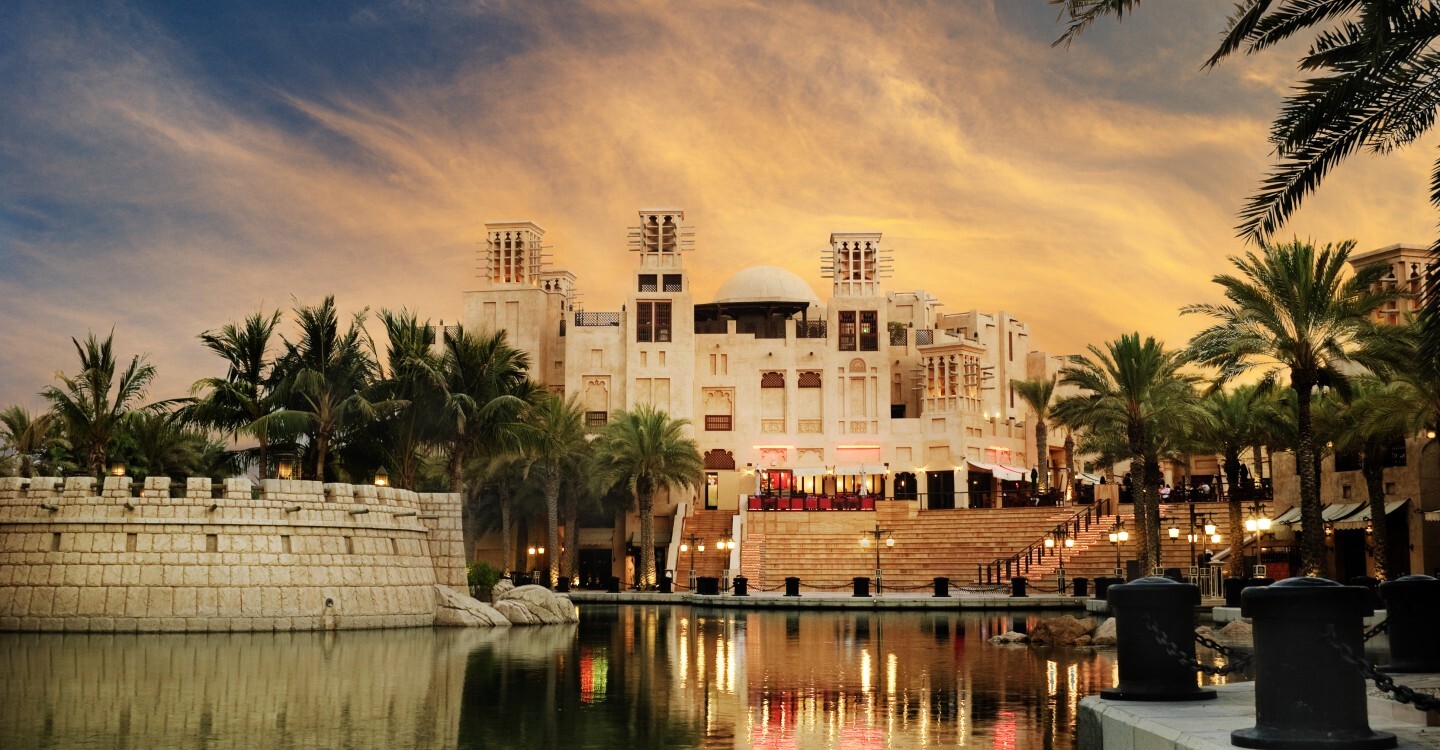
There’s a particular kind of beauty in contradiction, when the new doesn’t erase the old, but embraces it. In a city that often makes headlines for its futuristic ambition, a more reflective transformation is quietly unfolding.
Beneath the sculpted skylines and record-breaking façades, a deeper story is being built: the intentional preservation of heritage within the rhythm of modern development.
This isn’t about placing old next to new. It’s about building forward while holding onto what matters, integrating the forms, materials, and memories that have shaped the Emirates into the very structure of tomorrow’s communities.
Wind towers appear beside solar panels. Courtyards open into smart homes. Mudbrick tones meet engineered facades. Across districts, resorts, and residential enclaves, the past is not being replicated, it’s being reinterpreted.
In this evolving cityscape, heritage is no longer something stored in archives or locked in time. It’s becoming part of the design brief, the architectural language, the everyday life of urban Dubai.
Beneath the sculpted skylines and record-breaking façades, a deeper story is being built: the intentional preservation of heritage within the rhythm of modern development.
This isn’t about placing old next to new. It’s about building forward while holding onto what matters, integrating the forms, materials, and memories that have shaped the Emirates into the very structure of tomorrow’s communities.
Wind towers appear beside solar panels. Courtyards open into smart homes. Mudbrick tones meet engineered facades. Across districts, resorts, and residential enclaves, the past is not being replicated, it’s being reinterpreted.
In this evolving cityscape, heritage is no longer something stored in archives or locked in time. It’s becoming part of the design brief, the architectural language, the everyday life of urban Dubai.
More Than a Backdrop: Heritage as a Foundation
In many cities, heritage districts are preserved like artifacts, admired from a distance, beautiful but inert. They exist on the fringe of modern life, as if history and progress are incompatible. But in Dubai, a more layered narrative is being written, one where heritage is not merely protected but projected into the future.
Here, culture is not confined to museums or walled quarters. It is being threaded into the very seams of new developments. The goal is not just to honour the past, but to live with it, to allow it to breathe through the patterns of daily life.
Developers are no longer designing around heritage; they are designing through it.
A carved archway isn’t a stylistic afterthought; it’s a gesture of continuity. A wind tower isn’t symbolic, it becomes a functioning element, adapted for modern ventilation. Courtyards once used for family gatherings are reborn as communal nodes in residential clusters. The aesthetics of the past are being recoded to serve the present, not as ornament, but as logic.
Local stone, earthy textures, latticework, soft colour palettes, all these elements are making a quiet return. But they’re paired with sustainable materials, integrated technology, and space planning that reflects contemporary needs. This architectural duality allows memory and innovation to co-exist, not in contrast, but in choreography.
In this way, Dubai is shifting the role of heritage from static to structural, from something that’s visited occasionally, to something that’s experienced daily. It’s not about looking back with nostalgia. It’s about looking forward with awareness.
Here, culture is not confined to museums or walled quarters. It is being threaded into the very seams of new developments. The goal is not just to honour the past, but to live with it, to allow it to breathe through the patterns of daily life.
Developers are no longer designing around heritage; they are designing through it.
A carved archway isn’t a stylistic afterthought; it’s a gesture of continuity. A wind tower isn’t symbolic, it becomes a functioning element, adapted for modern ventilation. Courtyards once used for family gatherings are reborn as communal nodes in residential clusters. The aesthetics of the past are being recoded to serve the present, not as ornament, but as logic.
Local stone, earthy textures, latticework, soft colour palettes, all these elements are making a quiet return. But they’re paired with sustainable materials, integrated technology, and space planning that reflects contemporary needs. This architectural duality allows memory and innovation to co-exist, not in contrast, but in choreography.
In this way, Dubai is shifting the role of heritage from static to structural, from something that’s visited occasionally, to something that’s experienced daily. It’s not about looking back with nostalgia. It’s about looking forward with awareness.
Districts That Remember
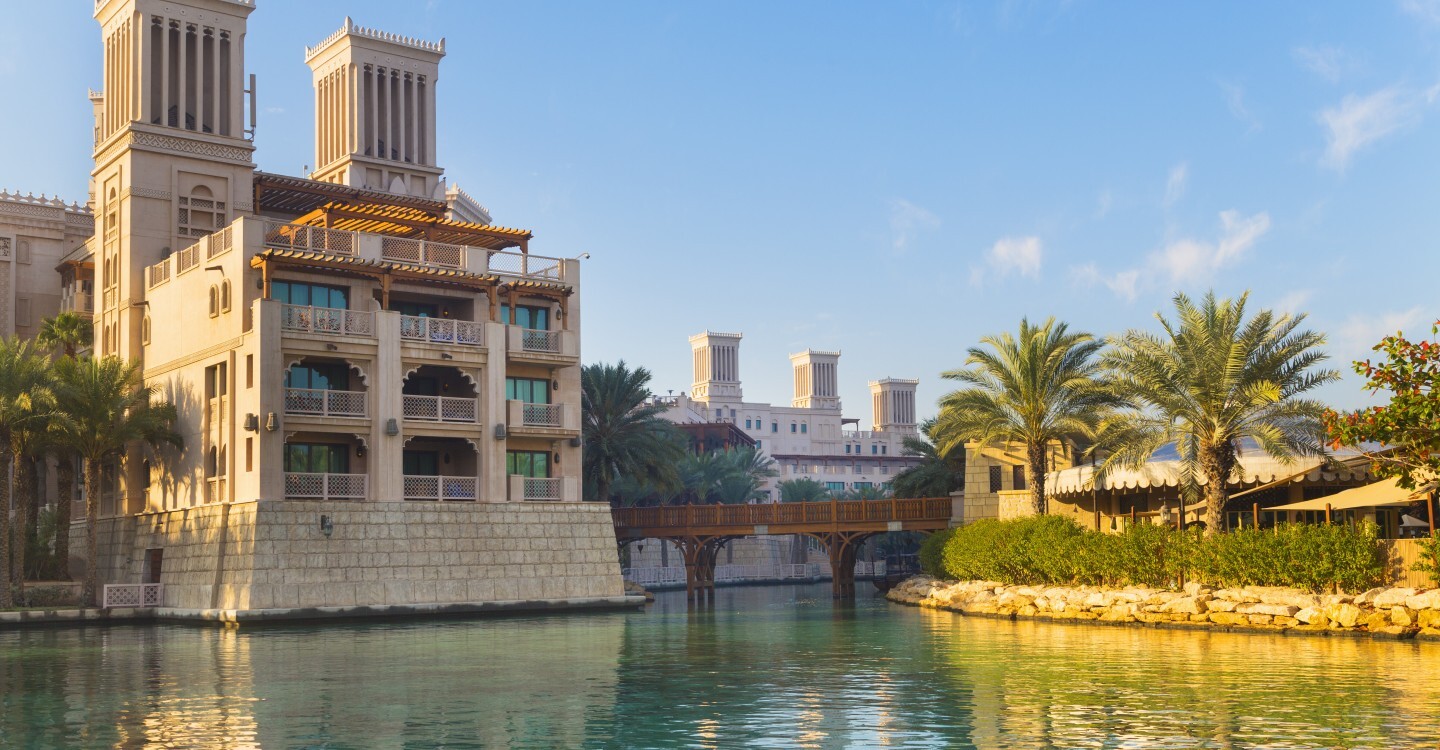
Take Al Seef, for example, a beautifully orchestrated waterfront that mirrors the look and feel of early Emirati trading ports. Along the Dubai Creek, rustic textures, wind towers, and narrow alleys merge with boutique hotels, contemporary retail, and pedestrian-friendly walkways. It’s immersive without being artificial, a nod to what was, shaped into what is.
Nearby, Al Fahidi Historical Districtstands as one of the city’s most heartfelt restorations. Once a residential quarter, its ochre-coloured walls, wooden doors, and carved niches now house art galleries, cultural spaces, and cafés. But rather than turning into a relic, the district lives on as a creative ecosystem, proving that the past can inspire the present when given the right space to breathe.
And in the mountains of Hatta, heritage preservation takes a scenic turn. Traditional stone houses have been carefully revitalized as part of an eco-tourism initiative, bringing age-old craftsmanship into dialogue with sustainable living. Here, nature, culture, and architecture come together, not in competition, but in harmony.
Even in high-end residential areas like Madinat Jumeirah Living, we see the influence of heritage in form and spirit. Inspired by traditional Arabian towns, its shaded walkways, courtyard-style living, and sand-toned façades offer residents the quiet luxury of cultural continuity in the heart of modern Dubai.
Nearby, Al Fahidi Historical Districtstands as one of the city’s most heartfelt restorations. Once a residential quarter, its ochre-coloured walls, wooden doors, and carved niches now house art galleries, cultural spaces, and cafés. But rather than turning into a relic, the district lives on as a creative ecosystem, proving that the past can inspire the present when given the right space to breathe.
And in the mountains of Hatta, heritage preservation takes a scenic turn. Traditional stone houses have been carefully revitalized as part of an eco-tourism initiative, bringing age-old craftsmanship into dialogue with sustainable living. Here, nature, culture, and architecture come together, not in competition, but in harmony.
Even in high-end residential areas like Madinat Jumeirah Living, we see the influence of heritage in form and spirit. Inspired by traditional Arabian towns, its shaded walkways, courtyard-style living, and sand-toned façades offer residents the quiet luxury of cultural continuity in the heart of modern Dubai.
The New Meaning of Modern

What once defined "modern", minimalism, glass, steel, is gradually making space for something more meaningful. Today’s developments are embracing tactility, imperfection, warmth.
Carved mashrabiya screens, the intricate wooden lattices once used to filter light, air, and views in traditional Emirati homes, are being reimagined as both decorative and functional. Calligraphic motifs make their way into facades. Local stone and plaster finishes return with pride. This is not a retreat from progress; it’s progress with identity.
In many ways, this design philosophy reflects a broader cultural shift, a desire for depth, belonging, and narrative in our environments. It’s not just about what we build, but what we choose to carry forward.
Carved mashrabiya screens, the intricate wooden lattices once used to filter light, air, and views in traditional Emirati homes, are being reimagined as both decorative and functional. Calligraphic motifs make their way into facades. Local stone and plaster finishes return with pride. This is not a retreat from progress; it’s progress with identity.
In many ways, this design philosophy reflects a broader cultural shift, a desire for depth, belonging, and narrative in our environments. It’s not just about what we build, but what we choose to carry forward.
Heritage Is the Future’s Secret Ingredient
Preserving local heritage in the built environment isn’t a romantic indulgence. It’s a strategic, cultural, and environmental asset. It fosters a sense of rootedness in transient times. It draws visitors in with authenticity. And for residents, it creates emotional landmarks, places that feel lived in before they've even been moved into.
Dubai, ever evolving, is proving that innovation doesn’t mean starting from zero. The future, it seems, is stronger when it's anchored to something meaningful.
So, as the skyline continues to rise, what’s most inspiring is not just how high Dubai can build, but how deeply it remembers.
Dubai, ever evolving, is proving that innovation doesn’t mean starting from zero. The future, it seems, is stronger when it's anchored to something meaningful.
So, as the skyline continues to rise, what’s most inspiring is not just how high Dubai can build, but how deeply it remembers.