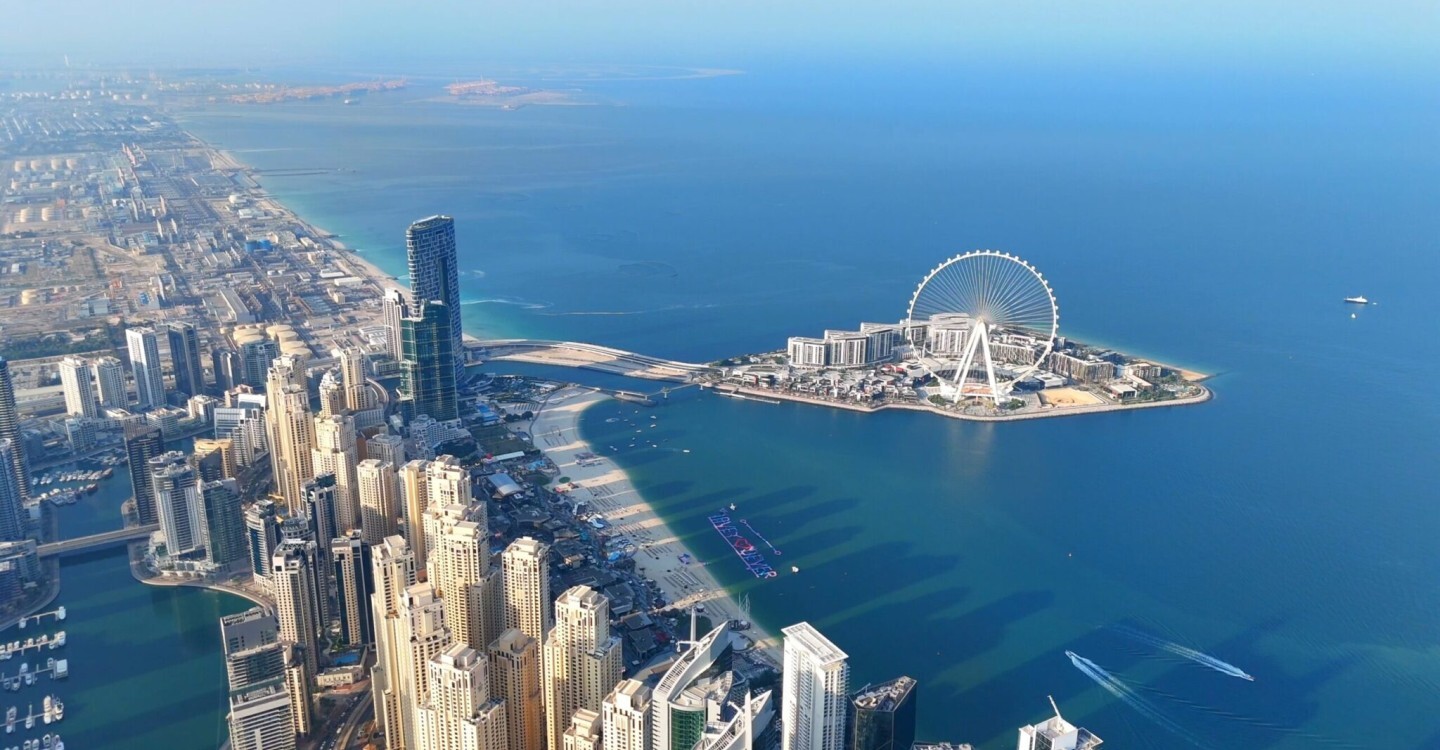
When a new development launches in Dubai, the public sees the polished side of the story.
The striking architecture. The immersive sales gallery. The waterfront views. The lifestyle promises. The vision of what life could look like once the project is complete.
What remains invisible is everything that happened before.
Long before architects begin sketching façades or designers start selecting materials, a project exists as a question. Sometimes just a conversation. Sometimes a bold idea written on a single sheet of paper. And more often than many realise, those ideas never make it any further.
In real estate development, some of the most important decisions are made before a building has a shape.
The success of a project is often determined not by its design, but by the intelligence, research, and strategic thinking that precede it.
Behind every tower, community, and mixed-use destination lies a phase few people see, where research, strategy, and planning determine what will eventually rise from the ground.
The striking architecture. The immersive sales gallery. The waterfront views. The lifestyle promises. The vision of what life could look like once the project is complete.
What remains invisible is everything that happened before.
Long before architects begin sketching façades or designers start selecting materials, a project exists as a question. Sometimes just a conversation. Sometimes a bold idea written on a single sheet of paper. And more often than many realise, those ideas never make it any further.
In real estate development, some of the most important decisions are made before a building has a shape.
The success of a project is often determined not by its design, but by the intelligence, research, and strategic thinking that precede it.
Behind every tower, community, and mixed-use destination lies a phase few people see, where research, strategy, and planning determine what will eventually rise from the ground.
Every Project Begins with a Hypothesis
Developers do not start by asking what a building should look like.
They start by asking whether it should exist at all.
That distinction may sound simple, but it forms the foundation of every successful development.
Before a site plan is drawn, developers spend months studying the market. They investigate shifting demographics, buyer preferences, economic indicators, tourism trends, infrastructure plans, and investment activity. They seek to understand not only what people want today, but what they may desire three, five, or even ten years from now.
This process has become increasingly important within the Dubai real estate market, where new opportunities emerge at remarkable speed. Areas that were once considered peripheral can rapidly transform into investment hotspots, while buyer expectations continue to evolve alongside the city itself.
The most successful developments are rarely reactions to today's market. They are responses to tomorrow's.
They start by asking whether it should exist at all.
That distinction may sound simple, but it forms the foundation of every successful development.
Before a site plan is drawn, developers spend months studying the market. They investigate shifting demographics, buyer preferences, economic indicators, tourism trends, infrastructure plans, and investment activity. They seek to understand not only what people want today, but what they may desire three, five, or even ten years from now.
This process has become increasingly important within the Dubai real estate market, where new opportunities emerge at remarkable speed. Areas that were once considered peripheral can rapidly transform into investment hotspots, while buyer expectations continue to evolve alongside the city itself.
The most successful developments are rarely reactions to today's market. They are responses to tomorrow's.
Looking for Demand That Doesn't Exist Yet
One of the biggest misconceptions about real estate development is that developers simply build where demand already exists.
In reality, they spend considerable time trying to identify demand before it becomes obvious.
This is where real estate market research becomes invaluable.
Through detailed property market analysis, development teams examine transaction data, population growth patterns, supply pipelines, rental performance, infrastructure investments, and broader economic trends. The objective is not merely to understand where the market stands today, but where it is heading.
Years before a community becomes a headline, developers are already studying its potential.
The rise of areas such as Dubai South, Dubai Islands, Dubai Creek Harbour, and Palm Jebel Ali reflects this long-term thinking. These locations did not emerge because developers happened to find available land. They emerged because strategic analysis suggested they could become future centres of growth.
For investors seeking insights into Dubai property investment opportunities, the same principle applies. The greatest opportunities are often identified before they become common knowledge.
Finding value is one thing.
Recognising future value is another.
In reality, they spend considerable time trying to identify demand before it becomes obvious.
This is where real estate market research becomes invaluable.
Through detailed property market analysis, development teams examine transaction data, population growth patterns, supply pipelines, rental performance, infrastructure investments, and broader economic trends. The objective is not merely to understand where the market stands today, but where it is heading.
Years before a community becomes a headline, developers are already studying its potential.
The rise of areas such as Dubai South, Dubai Islands, Dubai Creek Harbour, and Palm Jebel Ali reflects this long-term thinking. These locations did not emerge because developers happened to find available land. They emerged because strategic analysis suggested they could become future centres of growth.
For investors seeking insights into Dubai property investment opportunities, the same principle applies. The greatest opportunities are often identified before they become common knowledge.
Finding value is one thing.
Recognising future value is another.
Why Some Great Ideas Never Get Built
Perhaps the most overlooked part of development is the number of projects that never move forward.
A concept may appear promising. The location may seem attractive. The vision may be compelling.
Yet after months of evaluation, the numbers tell a different story.
This is where the real estate feasibility study comes into play.
Feasibility studies examine everything from land acquisition costs and construction expenses to projected revenues, financing structures, sales velocity, and market demand. They test assumptions, identify risks, and reveal whether a project is commercially viable.
Sometimes the outcome validates the concept.
Sometimes it prevents a costly mistake.
Within the industry, this stage is often considered one of the most valuable forms of risk management. It transforms ambition into measurable reality.
The best developers understand that success is not only about knowing what to build. It is also about knowing what not to build.
A concept may appear promising. The location may seem attractive. The vision may be compelling.
Yet after months of evaluation, the numbers tell a different story.
This is where the real estate feasibility study comes into play.
Feasibility studies examine everything from land acquisition costs and construction expenses to projected revenues, financing structures, sales velocity, and market demand. They test assumptions, identify risks, and reveal whether a project is commercially viable.
Sometimes the outcome validates the concept.
Sometimes it prevents a costly mistake.
Within the industry, this stage is often considered one of the most valuable forms of risk management. It transforms ambition into measurable reality.
The best developers understand that success is not only about knowing what to build. It is also about knowing what not to build.
Choosing a Location Means Predicting a Future
Location has always been a defining factor in real estate, but modern development requires a far deeper understanding of place.
Developers are no longer evaluating land solely based on its present condition. They are evaluating its future context.
What transportation links are planned? How will surrounding communities evolve? Where will employment centres expand? What lifestyle amenities will shape demand? Could a location become one of the best areas to invest in Dubai five years from now?
These questions influence decisions long before design begins.
Today's sought-after communities, including Downtown Dubai, Business Bay, Dubai Marina, Dubai Hills, MBR City, Emirates Living, and Jumeirah Village Circle, are all examples of locations that benefited from long-term planning and strategic positioning.
Developers are not simply selecting coordinates on a map.
They are placing bets on how people will live in the future.
Developers are no longer evaluating land solely based on its present condition. They are evaluating its future context.
What transportation links are planned? How will surrounding communities evolve? Where will employment centres expand? What lifestyle amenities will shape demand? Could a location become one of the best areas to invest in Dubai five years from now?
These questions influence decisions long before design begins.
Today's sought-after communities, including Downtown Dubai, Business Bay, Dubai Marina, Dubai Hills, MBR City, Emirates Living, and Jumeirah Village Circle, are all examples of locations that benefited from long-term planning and strategic positioning.
Developers are not simply selecting coordinates on a map.
They are placing bets on how people will live in the future.
Building an Identity Before Building a Property
Some of the world's most successful developments are remembered not because of their architecture, but because of what they represent.
That is why modern developers increasingly focus on place branding and destination branding before any design work begins.
The question is no longer, "What should we build?"
It has become, "What kind of place are we creating?"
Will it appeal to entrepreneurs? Families? Global investors? Wellness-focused residents? Luxury buyers?
Will it become a destination, a community, or a lifestyle statement?
These conversations occur months before architects receive a brief.
The rise of branded residences Dubai illustrates this shift particularly well. Buyers are increasingly investing in identity, experience, and reputation alongside physical real estate.
In many ways, the strongest developments begin as brands long before they become buildings.
That is why modern developers increasingly focus on place branding and destination branding before any design work begins.
The question is no longer, "What should we build?"
It has become, "What kind of place are we creating?"
Will it appeal to entrepreneurs? Families? Global investors? Wellness-focused residents? Luxury buyers?
Will it become a destination, a community, or a lifestyle statement?
These conversations occur months before architects receive a brief.
The rise of branded residences Dubai illustrates this shift particularly well. Buyers are increasingly investing in identity, experience, and reputation alongside physical real estate.
In many ways, the strongest developments begin as brands long before they become buildings.
Understanding the Investor Behind the Buyer
Real estate is often discussed from the perspective of residents, but investors play an equally important role in shaping development decisions.
Before planning begins, developers analyse who their future buyers are likely to be and what motivates them.
Some may be seeking strong Dubai rental yield performance.
Others may be focused on long-term capital appreciation.
Some may be exploring off plan property Dubai opportunities, while international investors may be evaluating eligibility for a Dubai golden visa property investment.
Each audience has distinct priorities, expectations, and investment horizons.
Understanding these differences allows developers to create products that align with market demand rather than assumptions.
It is one reason why experienced real estate advisory Dubai and real estate consulting Dubai professionals have become increasingly valuable during the earliest stages of development.
The most successful projects are rarely built for everyone.
They are carefully designed around a clearly defined audience from the very beginning.
Before planning begins, developers analyse who their future buyers are likely to be and what motivates them.
Some may be seeking strong Dubai rental yield performance.
Others may be focused on long-term capital appreciation.
Some may be exploring off plan property Dubai opportunities, while international investors may be evaluating eligibility for a Dubai golden visa property investment.
Each audience has distinct priorities, expectations, and investment horizons.
Understanding these differences allows developers to create products that align with market demand rather than assumptions.
It is one reason why experienced real estate advisory Dubai and real estate consulting Dubai professionals have become increasingly valuable during the earliest stages of development.
The most successful projects are rarely built for everyone.
They are carefully designed around a clearly defined audience from the very beginning.
The Growing Role of Data and Intelligence
A decade ago, market research primarily relied on historical data and industry expertise.
Today, the process is becoming far more sophisticated.
Advances in AI in real estate are enabling developers to analyse enormous volumes of information, identify patterns, forecast demand, and evaluate opportunities with unprecedented precision.
Meanwhile, PropTech Dubai continues to reshape how projects are planned, marketed, and managed.
Data now influences decisions ranging from unit mix and pricing strategies to community amenities and mobility planning.
This evolution has given rise to a new generation of real estate intelligence tools that help developers understand markets with greater clarity than ever before.
The industry is increasingly moving from instinct-based decision making to evidence-based strategy.
In a competitive environment, information itself has become an asset.
Today, the process is becoming far more sophisticated.
Advances in AI in real estate are enabling developers to analyse enormous volumes of information, identify patterns, forecast demand, and evaluate opportunities with unprecedented precision.
Meanwhile, PropTech Dubai continues to reshape how projects are planned, marketed, and managed.
Data now influences decisions ranging from unit mix and pricing strategies to community amenities and mobility planning.
This evolution has given rise to a new generation of real estate intelligence tools that help developers understand markets with greater clarity than ever before.
The industry is increasingly moving from instinct-based decision making to evidence-based strategy.
In a competitive environment, information itself has become an asset.
Preparing for a Different Future
The future of real estate is being shaped by forces that would have seemed distant only a few years ago. Smart city development initiatives are redefining expectations around connectivity, mobility, and urban living.
Tokenised real estate is introducing new conversations around ownership and investment accessibility. Digital real estate platforms continue to transform how properties are marketed and transacted.
At the same time, sustainability is becoming a central consideration rather than an optional feature.
Developers increasingly evaluate projects through the lens of sustainable real estate and ESG real estate principles before construction begins. Environmental performance, resource efficiency, community impact, and long-term resilience are now part of the planning conversation from day one.
The buildings of tomorrow are being shaped by decisions made today.
Tokenised real estate is introducing new conversations around ownership and investment accessibility. Digital real estate platforms continue to transform how properties are marketed and transacted.
At the same time, sustainability is becoming a central consideration rather than an optional feature.
Developers increasingly evaluate projects through the lens of sustainable real estate and ESG real estate principles before construction begins. Environmental performance, resource efficiency, community impact, and long-term resilience are now part of the planning conversation from day one.
The buildings of tomorrow are being shaped by decisions made today.
The Stage That Determines Everything
By the time the public sees a project launch, most of the critical decisions have already been made.
The market has been analysed.
The feasibility has been tested.
The audience has been identified.
The location has been evaluated.
The positioning has been defined.
The future has been imagined.
Only then does the design process begin.
It is easy to admire a completed skyline or an architectural masterpiece. What is less visible is the extraordinary amount of intelligence, strategy, and foresight required to bring that vision into existence.
Because before every landmark rises from the ground, it first takes shape in research, analysis, and conviction.
And in many ways, that invisible stage is where real estate development truly begins.
The market has been analysed.
The feasibility has been tested.
The audience has been identified.
The location has been evaluated.
The positioning has been defined.
The future has been imagined.
Only then does the design process begin.
It is easy to admire a completed skyline or an architectural masterpiece. What is less visible is the extraordinary amount of intelligence, strategy, and foresight required to bring that vision into existence.
Because before every landmark rises from the ground, it first takes shape in research, analysis, and conviction.
And in many ways, that invisible stage is where real estate development truly begins.