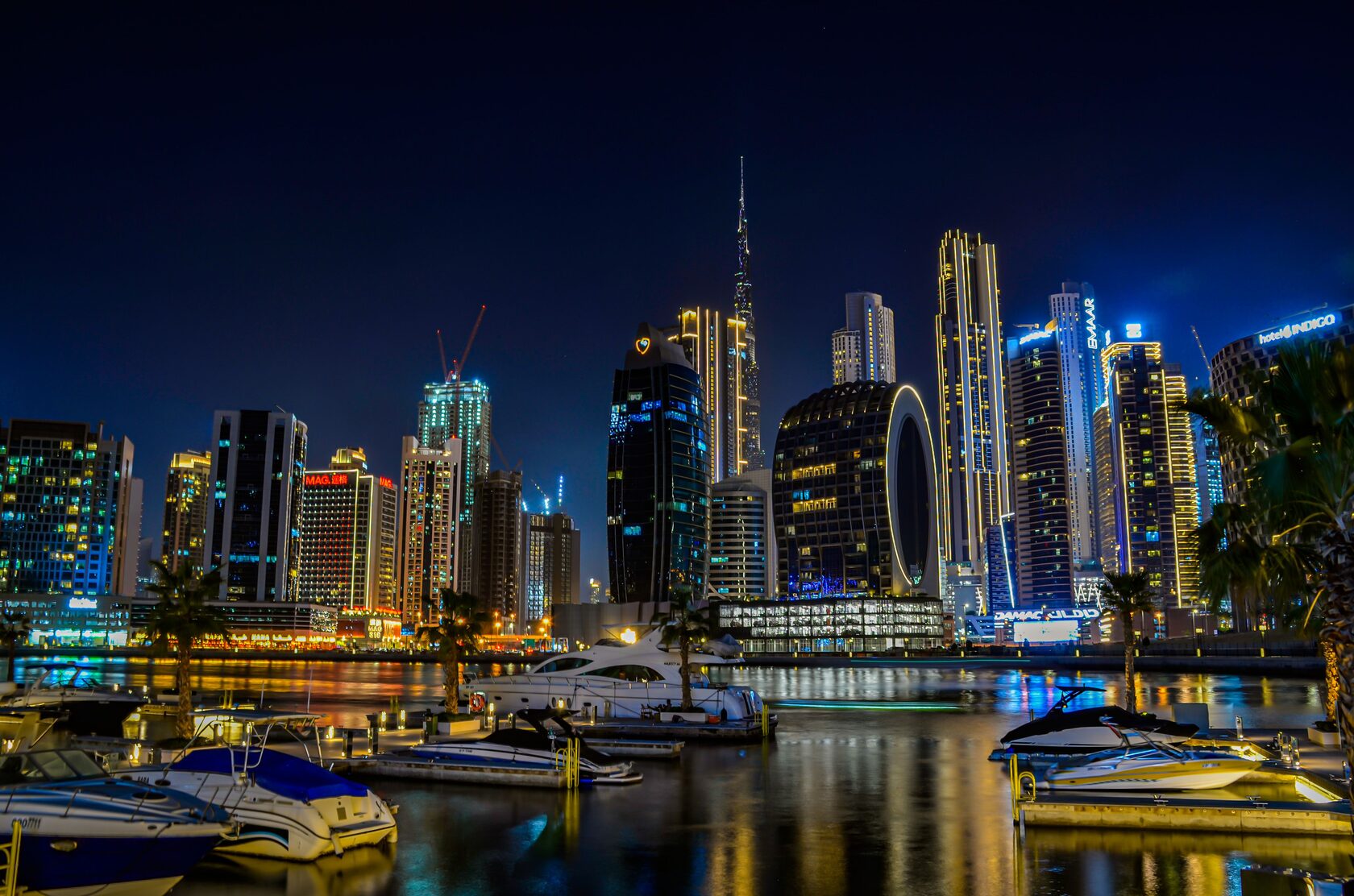
Why do some places produce more entrepreneurs, attract more investment, and generate greater economic mobility than others? The answer has a lot to do with an unexpected aspect: geography.
The concept of the geography of opportunity argues that where you live profoundly shapes the opportunities you access. Cities are ecosystems that either accelerate or limit economic mobility, innovation, and prosperity. Some regions concentrate jobs, capital, infrastructure, education, and influential networks, while others remain disconnected from these engines of growth.
Few cities illustrate this idea more deliberately than Dubai.
Unlike historic global capitals that evolved over centuries, Dubai was built with intention and its rise was precisely engineered. Over just a few decades, the emirate transformed itself from a regional trading port into one of the world's most connected hubs for business, finance, tourism, logistics, and innovation.
The concept of the geography of opportunity argues that where you live profoundly shapes the opportunities you access. Cities are ecosystems that either accelerate or limit economic mobility, innovation, and prosperity. Some regions concentrate jobs, capital, infrastructure, education, and influential networks, while others remain disconnected from these engines of growth.
Few cities illustrate this idea more deliberately than Dubai.
Unlike historic global capitals that evolved over centuries, Dubai was built with intention and its rise was precisely engineered. Over just a few decades, the emirate transformed itself from a regional trading port into one of the world's most connected hubs for business, finance, tourism, logistics, and innovation.
Understanding the Geography of Opportunity
At its core, the geography of opportunity is shaped by several interconnected factors:
When these elements come together, they create a powerful cycle. Opportunity attracts talent. Talent attracts investment. Investment fuels innovation. Innovation creates even more opportunity.
The world's leading economic centres, from London and New York to Singapore and Hong Kong, became global magnets because they connected people to expanding markets and resources.
Dubai has followed a similar path, but with a distinctly twenty-first-century strategy built around speed, connectivity, and intentional urban planning.
- Access to employment and economic activity
- Connectivity to transportation and global markets
- Availability of capital and entrepreneurial ecosystems
- High-quality infrastructure and public services
- Exposure to diverse social and professional networks
- Regulations that encourage investment, business creation, and mobility
When these elements come together, they create a powerful cycle. Opportunity attracts talent. Talent attracts investment. Investment fuels innovation. Innovation creates even more opportunity.
The world's leading economic centres, from London and New York to Singapore and Hong Kong, became global magnets because they connected people to expanding markets and resources.
Dubai has followed a similar path, but with a distinctly twenty-first-century strategy built around speed, connectivity, and intentional urban planning.
Turning Geography into a Competitive Advantage
Geography alone doesn't create prosperity; the defining factor is what a city does with it. Dubai sits at the crossroads of Europe, Asia, and Africa, placing billions of consumers within a single flight. Many cities would consider that fortunate geography, but Dubai transformed location into an integrated logistics platform.
Massive investments in Jebel Ali Port, Dubai International Airport, Emirates Airline, and an expanding multimodal transport network created seamless connections between sea, air, and land. The ongoing expansion of Al Maktoum International Airport and the development of Etihad Rail further strengthen Dubai's role as a regional gateway, allowing goods, people, and capital to move with exceptional efficiency.
Massive investments in Jebel Ali Port, Dubai International Airport, Emirates Airline, and an expanding multimodal transport network created seamless connections between sea, air, and land. The ongoing expansion of Al Maktoum International Airport and the development of Etihad Rail further strengthen Dubai's role as a regional gateway, allowing goods, people, and capital to move with exceptional efficiency.
Infrastructure Creates Growth
Infrastructure is often viewed as something that supports economic activity. Dubai treats it as something that creates it.
The city invested ahead of demand in roads, ports, airports, telecommunications, utilities, and public transport. The Dubai Metro reshaped urban mobility by connecting residential communities with major business districts, while the Etihad Rail is extending connectivity beyond Dubai to create a nationally integrated logistics network.
Digital infrastructure has received the same strategic attention. High-speed connectivity, smart city technologies, and digital government services reduce friction for both residents and businesses. Entrepreneurs can establish companies, access government services, and manage operations with remarkable speed, allowing them to focus on growth rather than bureaucracy.
In Dubai, infrastructure is about accelerating economic activity.
The city invested ahead of demand in roads, ports, airports, telecommunications, utilities, and public transport. The Dubai Metro reshaped urban mobility by connecting residential communities with major business districts, while the Etihad Rail is extending connectivity beyond Dubai to create a nationally integrated logistics network.
Digital infrastructure has received the same strategic attention. High-speed connectivity, smart city technologies, and digital government services reduce friction for both residents and businesses. Entrepreneurs can establish companies, access government services, and manage operations with remarkable speed, allowing them to focus on growth rather than bureaucracy.
In Dubai, infrastructure is about accelerating economic activity.
Free Zones: Purpose-Built Ecosystems for Business
Dubai’s freezone districts were designed as economic ecosystems.
By simplifying regulations, encouraging foreign investment, and clustering companies within specific industries, Dubai created environments where businesses benefit from proximity to investors, suppliers, service providers, and highly skilled professionals.
Opportunity becomes concentrated, then knowledge spreads, causing partnerships form more naturally, which finally gets Innovation accelerating.
This is the power of density: when talented people and ambitious companies are placed close together, the whole ecosystem becomes more valuable than the sum of its parts.
By simplifying regulations, encouraging foreign investment, and clustering companies within specific industries, Dubai created environments where businesses benefit from proximity to investors, suppliers, service providers, and highly skilled professionals.
Opportunity becomes concentrated, then knowledge spreads, causing partnerships form more naturally, which finally gets Innovation accelerating.
This is the power of density: when talented people and ambitious companies are placed close together, the whole ecosystem becomes more valuable than the sum of its parts.
A City Designed to Attract Global Talent
One of Dubai's greatest achievements has been creating an environment capable of attracting talent from around the world. Rather than relying on a single domestic workforce, the city positioned itself as an international destination for entrepreneurs, investors, executives, researchers, and skilled professionals.
This diversity produces something economists often describe as network opportunity; the idea that access to people, ideas, and relationships can be just as valuable as access to money or physical assets.
In many cases, your next opportunity isn't hidden in a job listing. It's sitting across the table from you. Dubai's multicultural business environment dramatically increases the likelihood of those connections happening.
This diversity produces something economists often describe as network opportunity; the idea that access to people, ideas, and relationships can be just as valuable as access to money or physical assets.
In many cases, your next opportunity isn't hidden in a job listing. It's sitting across the table from you. Dubai's multicultural business environment dramatically increases the likelihood of those connections happening.
Compressing Distance in a Global Economy
For centuries, geography imposed limits on growth. Distance increased costs, slowed communication, and restricted access to markets.
Dubai's strategy has been remarkably consistent: eliminate as much of that friction as possible.
Through Emirates Airline's extensive global network, Dubai International Airport's unparalleled international connectivity, one of the world's leading maritime logistics hubs at Jebel Ali Port, and digital initiatives such as UAE Pass and paperless government services, businesses can interact with customers, governments, suppliers, and investors with minimal administrative barriers.
Increasingly, the city is extending this philosophy into the digital economy through initiatives such as the Dubai AI Campus and the Dubai Centre for Artificial Intelligence, positioning itself as a regional platform for AI companies, research, and innovation.
In today's economy, competitive advantage is measured not simply by the speed at which people, goods, capital, data, and ideas can move.
Dubai's strategy has been remarkably consistent: eliminate as much of that friction as possible.
Through Emirates Airline's extensive global network, Dubai International Airport's unparalleled international connectivity, one of the world's leading maritime logistics hubs at Jebel Ali Port, and digital initiatives such as UAE Pass and paperless government services, businesses can interact with customers, governments, suppliers, and investors with minimal administrative barriers.
Increasingly, the city is extending this philosophy into the digital economy through initiatives such as the Dubai AI Campus and the Dubai Centre for Artificial Intelligence, positioning itself as a regional platform for AI companies, research, and innovation.
In today's economy, competitive advantage is measured not simply by the speed at which people, goods, capital, data, and ideas can move.
Opportunity by Design
Perhaps the most remarkable aspect of Dubai's rise is that opportunity is woven into the city's design.
Business districts are integrated with transportation infrastructure. Residential communities connect seamlessly with commercial centres. Industries are strategically clustered to encourage collaboration, innovation, and investment. International accessibility is treated as a core feature rather than an afterthought.
This reflects a broader philosophy: cities should amplify economic activity. Dubai has embraced that philosophy more intentionally.
Business districts are integrated with transportation infrastructure. Residential communities connect seamlessly with commercial centres. Industries are strategically clustered to encourage collaboration, innovation, and investment. International accessibility is treated as a core feature rather than an afterthought.
This reflects a broader philosophy: cities should amplify economic activity. Dubai has embraced that philosophy more intentionally.
The Bigger Lesson
Opportunity in Dubai extends beyond physical infrastructure. It is embedded in the city's institutions.
A resident can establish a company in a specialised free zone, authenticate documents through UAE Pass, access government services digitally, travel to hundreds of international destinations through one of the world's busiest aviation hubs, and connect with investors and multinational firms clustered in districts such as DIFC, Dubai Internet City, and DMCC.
Each element reinforces the others. Transport supports business. Digital government reduces friction. Industry clusters encourage collaboration. Global connectivity attracts talent and capital. Together, they create an ecosystem where opportunity compounds rather than exists in isolation.
A resident can establish a company in a specialised free zone, authenticate documents through UAE Pass, access government services digitally, travel to hundreds of international destinations through one of the world's busiest aviation hubs, and connect with investors and multinational firms clustered in districts such as DIFC, Dubai Internet City, and DMCC.
Each element reinforces the others. Transport supports business. Digital government reduces friction. Industry clusters encourage collaboration. Global connectivity attracts talent and capital. Together, they create an ecosystem where opportunity compounds rather than exists in isolation.