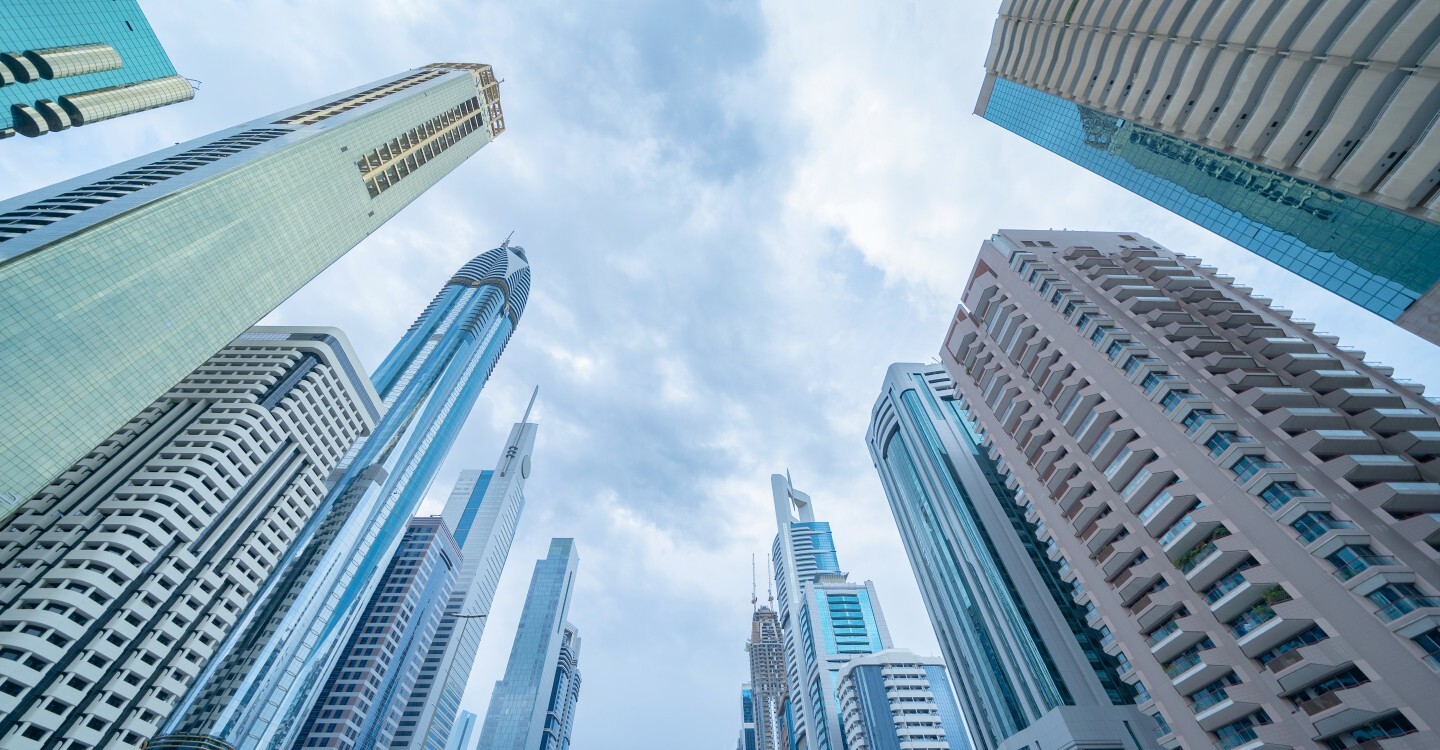
In the UAE, summer heat can soar past 45°C, and desert winds whisper through city streets carrying fine sand and centuries-old stories. The pace of urban expansion rivals that of global metropolises. In such a setting, architecture is not merely a visual expression, it’s a necessity.
Every wall, window, and walkway must answer to more than beauty; they must outsmart heat, filter light, and soften the edges of an intense environment. The UAE’s climate isn’t a silent backdrop, it’s an active force, shaping how buildings breathe, how interiors feel, and how lives unfold between indoors and out.
This is design born not from indulgence, but from challenge, where comfort is carefully engineered, one shadow, one breeze, one brilliant solution at a time.
Every wall, window, and walkway must answer to more than beauty; they must outsmart heat, filter light, and soften the edges of an intense environment. The UAE’s climate isn’t a silent backdrop, it’s an active force, shaping how buildings breathe, how interiors feel, and how lives unfold between indoors and out.
What rises from this landscape is not just concrete and steel, it’s architecture in constant conversation with its surroundings: responsive, resilient, and inherently human.
This is design born not from indulgence, but from challenge, where comfort is carefully engineered, one shadow, one breeze, one brilliant solution at a time.
A City Built in Defiance of Extremes
Dubai’s architectural landscape thrives in one of the most dynamic and sunlit climates on Earth. With over 3,500 hours of golden sunshine each year and minimal rainfall, the environment presents a unique canvas for creativity.
Even the fierce shamal winds, dry, north-westerly gusts, are treated not as obstacles but as design partners. In Dubai, architecture doesn’t resist nature; it collaborates with it, turning extremes into opportunities for creative expression and climate adaptation.
What’s emerging is a new kind of architecture, one less focused on ornament and more on orchestration. From the tilt of a façade that throws just the right amount of shade, to the textures and coatings that repel heat and dust, every decision is a response to reality.
Even the fierce shamal winds, dry, north-westerly gusts, are treated not as obstacles but as design partners. In Dubai, architecture doesn’t resist nature; it collaborates with it, turning extremes into opportunities for creative expression and climate adaptation.
What’s emerging is a new kind of architecture, one less focused on ornament and more on orchestration. From the tilt of a façade that throws just the right amount of shade, to the textures and coatings that repel heat and dust, every decision is a response to reality.
Orientation: The First Line of Défense
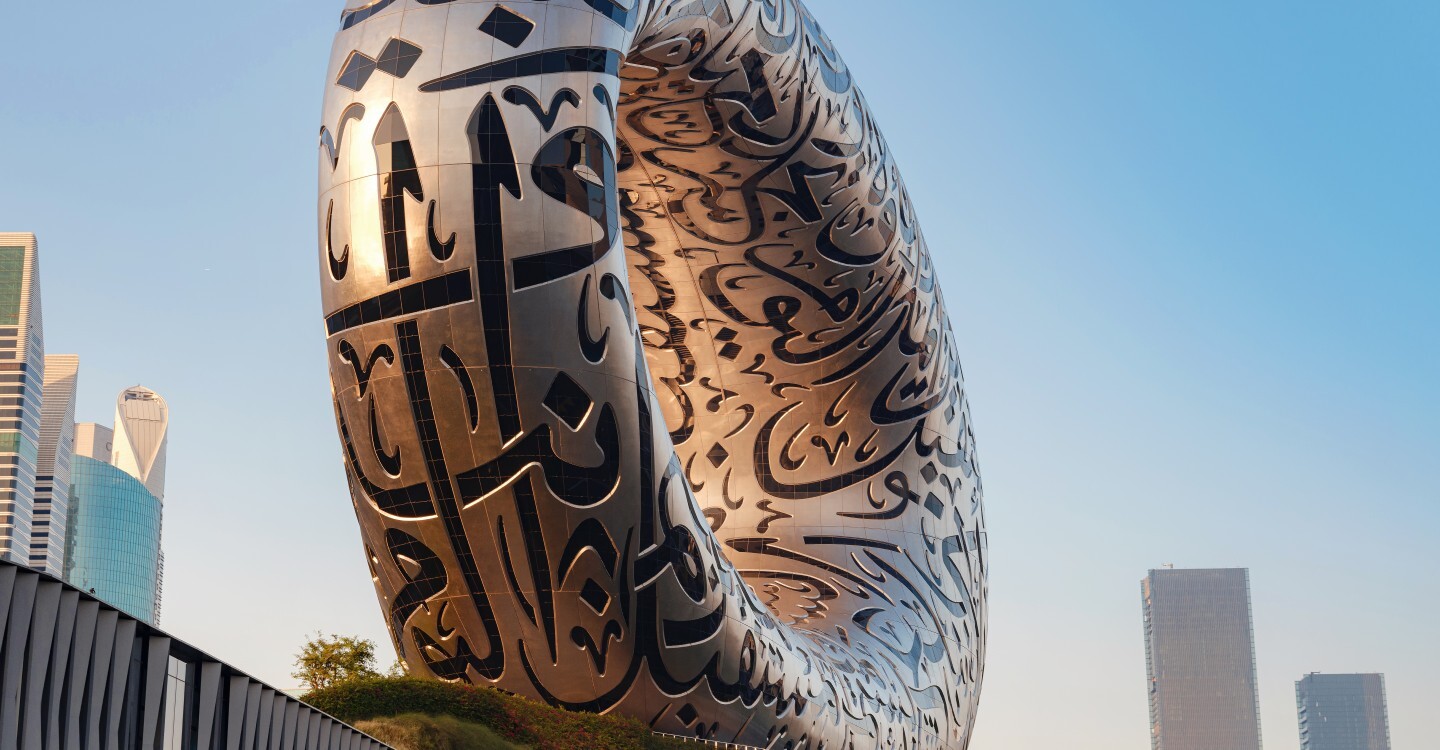
In Dubai, where sunlight can turn glass buildings into furnaces, orientation is a critical starting point. Smart buildings are aligned east to west to minimize exposure to the intense afternoon sun, while façades are crafted with deep overhangs, recessed windows, and shaded terraces.
Take the Museum of the Future, its iconic torus form isn’t just futuristic flair. Its curves are designed to manage solar exposure, limiting direct heat gain while enhancing natural light.
It’s a powerful reminder that in the UAE, visionary form and climate-conscious function aren’t at odds, they’re inseparable, shaping a future where beauty and performance rise as one.
Take the Museum of the Future, its iconic torus form isn’t just futuristic flair. Its curves are designed to manage solar exposure, limiting direct heat gain while enhancing natural light.
It’s a powerful reminder that in the UAE, visionary form and climate-conscious function aren’t at odds, they’re inseparable, shaping a future where beauty and performance rise as one.
Façade Innovation: Beyond the Surface
Cladding in Dubai is no longer just aesthetic; it’s performative.
Double-skin façades, ventilated cladding systems, and kinetic shading devices are reshaping the skyline. The Al Bahr Towers in Abu Dhabi, though slightly outside Dubai, serve as a regional icon in climate-responsive design.
Their dynamic mashrabiya, a traditional Middle Eastern architectural element a projecting window or balcony enclosed with intricately carved wooden latticework, inspired façade opens and closes in response to the sun’s movement, reducing interior heat gain by up to 50%.
This revival of traditional motifs with high-tech engineering is not just visually poetic; it’s a model for sustainable adaptation. It’s a reminder that heritage and innovation are not opposites, they’re collaborators.
Wind Engineering: Channeling, Not Fighting
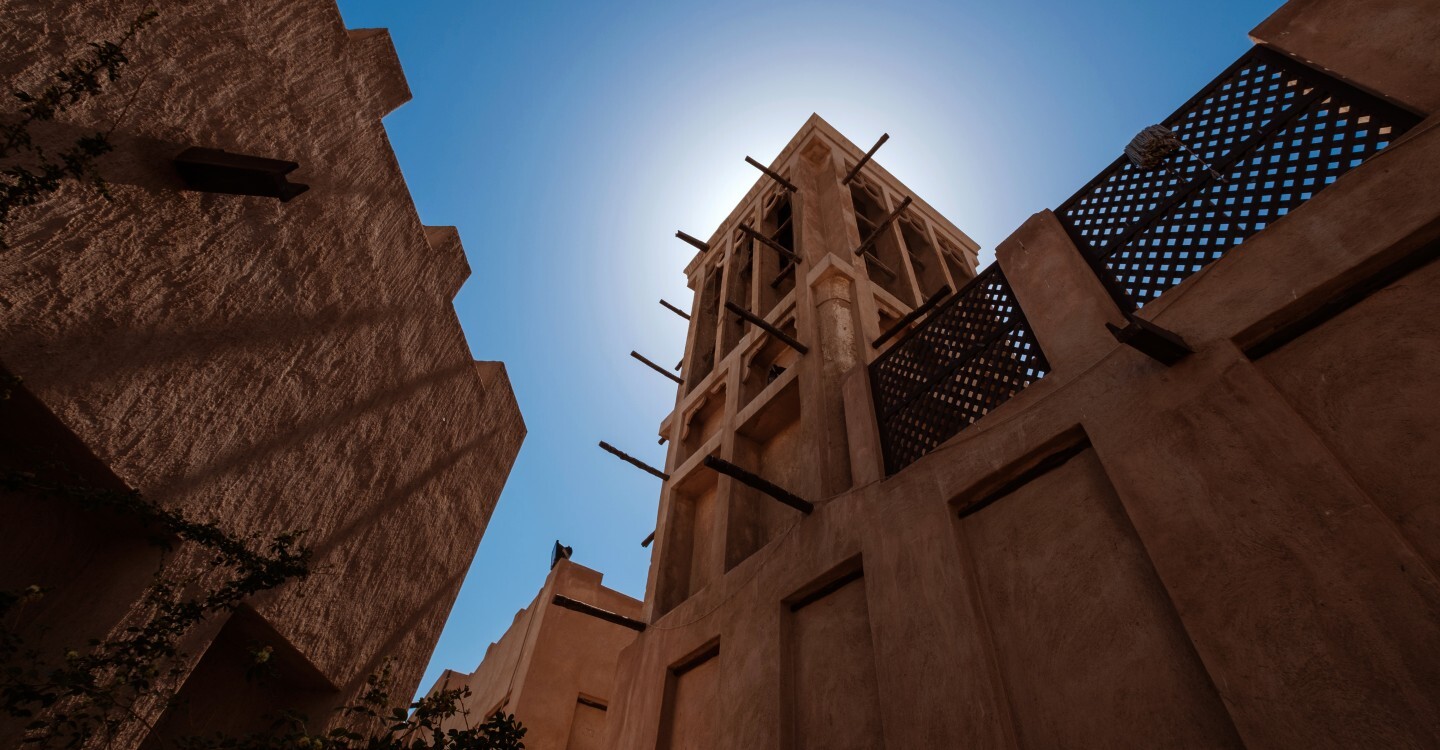
In many global cities, wind is harnessed for cooling. In Dubai, it’s both friend and foe. Wind tunnel testing is standard practice for skyscrapers to ensure resilience against desert gusts.
Passive ventilation techniques, borrowed from traditional wind towers (barajeel), are being reimagined in contemporary form, used to cool atriums, guide airflow through courtyards, and reduce reliance on mechanical cooling.
Take the Masdar Institute buildings in Abu Dhabi’s eco-city blueprint, they use a reinterpretation of wind towers to naturally ventilate spaces, offering a glimpse into what a sustainable Gulf city might feel like in decades to come.
Passive ventilation techniques, borrowed from traditional wind towers (barajeel), are being reimagined in contemporary form, used to cool atriums, guide airflow through courtyards, and reduce reliance on mechanical cooling.
Take the Masdar Institute buildings in Abu Dhabi’s eco-city blueprint, they use a reinterpretation of wind towers to naturally ventilate spaces, offering a glimpse into what a sustainable Gulf city might feel like in decades to come.
Materials That Endure, Reflect & Breathe
In Dubai, material choices carry weight. Surfaces must reflect sunlight, withstand sand abrasion, and resist corrosion from coastal air. High-albedo finishes are favored to bounce back solar heat, while advanced concrete mixes incorporate additives to endure salt and temperature stress.
Smart glazing, such as low-emissivity glass, maintains thermal comfort without sacrificing views. Traditional materials like stone, lime plaster, and terracotta are also making a comeback, not for nostalgia’s sake, but because they’re proven performers in this climate.
Here, sustainability isn’t a checkbox, it’s a survival strategy written into the DNA of every material used.
Smart glazing, such as low-emissivity glass, maintains thermal comfort without sacrificing views. Traditional materials like stone, lime plaster, and terracotta are also making a comeback, not for nostalgia’s sake, but because they’re proven performers in this climate.
Here, sustainability isn’t a checkbox, it’s a survival strategy written into the DNA of every material used.
The Sand Factor: Designing for the Invisible Foe
While heat is obvious, sand is the silent infiltrator. It scours façades, clogs HVAC systems, and reduces solar panel efficiency. Smart architects respond with design choices that reduce dust accumulation: sloped surfaces, self-cleaning coatings, minimized crevices, and mechanical systems built with fine filters and easy maintenance access.
Even landscaping plays a role. Native vegetation, gravel beds, and strategically placed barriers act as natural sand buffers, softening the wind’s abrasive reach before it meets built structures.
Even landscaping plays a role. Native vegetation, gravel beds, and strategically placed barriers act as natural sand buffers, softening the wind’s abrasive reach before it meets built structures.
Smart Cooling: Passive First, Tech Second
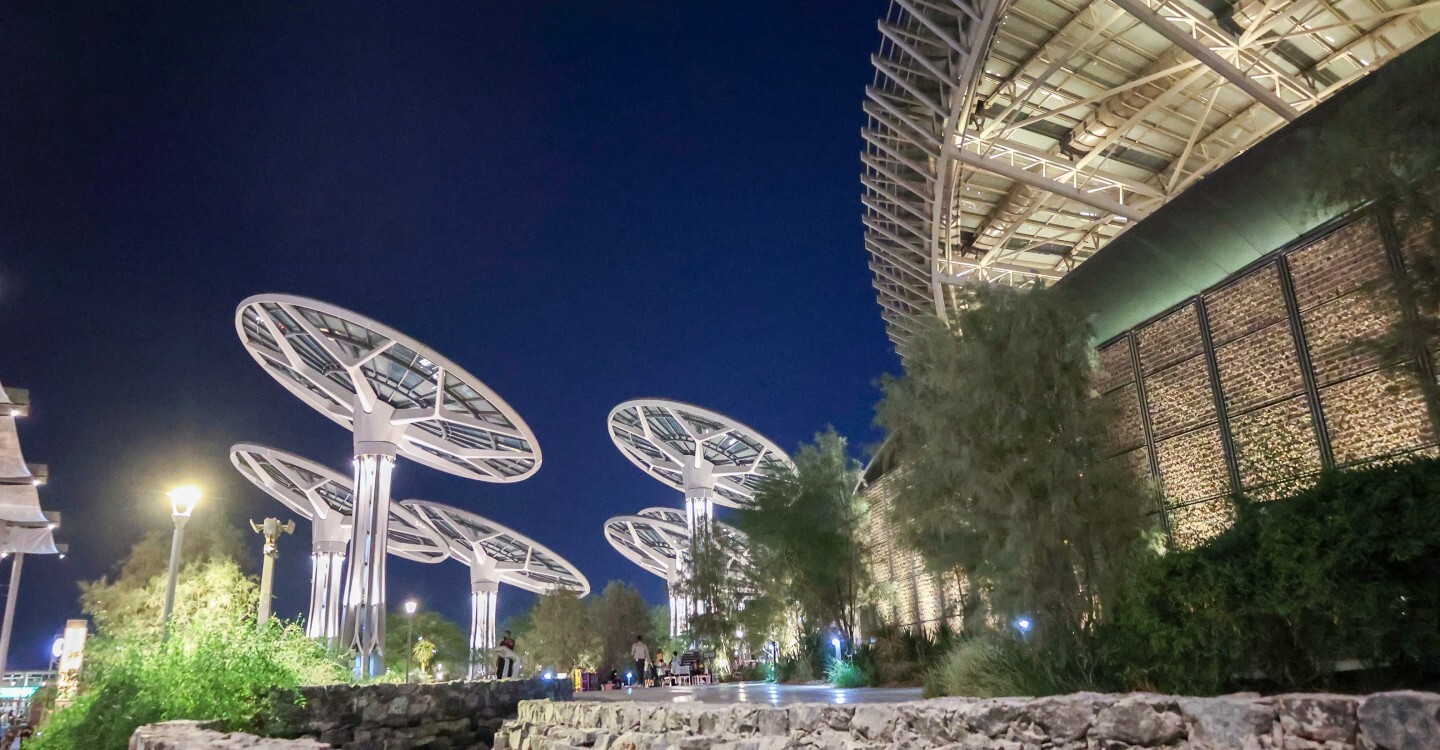
While HVAC systems are inevitable in Dubai, the most forward-thinking buildings reduce their burden through passive cooling. Thermal massing, natural ventilation, green roofs, and shaded outdoor spaces work in tandem to regulate indoor temperatures.
In developments like The Sustainable City and Expo 2020’s legacy district, cooling is approached holistically, using reflective materials, photovoltaic shading, and district cooling systems that reduce emissions and operational costs.
In developments like The Sustainable City and Expo 2020’s legacy district, cooling is approached holistically, using reflective materials, photovoltaic shading, and district cooling systems that reduce emissions and operational costs.
Designing the Future: Lessons from the Landscape
Dubai’s climate isn’t a limitation; it’s a design catalyst. The most innovative buildings here are those that embrace constraints and convert them into character. A shaded arch becomes more than a visual motif; it’s a temperature moderator.
A sand-inspired texture is more than decorative; it’s a surface that withstands abrasion. A window isn't just a view, it’s a calibrated aperture that balances light, heat, and dust control.
The future of architecture in Dubai isn’t just about sustainability; it’s about resilience. It’s about building systems that are not only efficient but expressive, where design becomes a dialogue between nature and necessity, past and progress, aesthetics and endurance.
A sand-inspired texture is more than decorative; it’s a surface that withstands abrasion. A window isn't just a view, it’s a calibrated aperture that balances light, heat, and dust control.
The future of architecture in Dubai isn’t just about sustainability; it’s about resilience. It’s about building systems that are not only efficient but expressive, where design becomes a dialogue between nature and necessity, past and progress, aesthetics and endurance.
Because in this climate, only architecture that listens to the land will ever truly belong.
Belonging to the Desert, By Design
In Dubai, smart architecture is not an option. It’s a survival instinct sculpted in steel, glass, and stone. To design here is to think like the desert: bold, adaptable, and quietly enduring.