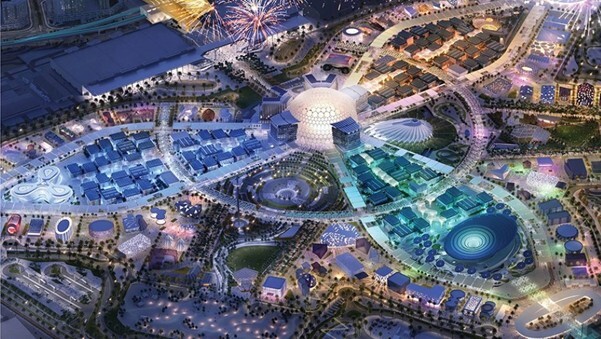
When the world gathered in Expo 2020 Dubai, the immediate impact was clear: global visibility, record visitor numbers, and billions invested in infrastructure. What is becoming clearer today is the event’s enduring real estate legacy. Rebranded as Expo City Dubai, the former exposition site is evolving into a mixed-use innovation hub, one that is reshaping surrounding districts and creating long-term spillover effects.
From enhanced transport links to commercial clustering, several nearby areas stand poised to benefit most sustainably. Here’s a closer look at the districts likely to see long-term gains.
From enhanced transport links to commercial clustering, several nearby areas stand poised to benefit most sustainably. Here’s a closer look at the districts likely to see long-term gains.
Dubai South: The Primary Beneficiary
Among all surrounding districts, Dubai South stands out as the clearest long-term winner.
1. Strategic Location
Dubai South directly borders Expo City, placing it at the centre of the legacy zone. Proximity alone ensures sustained demand from professionals working in Expo City’s innovation, sustainability, and logistics clusters.
2. Airport-Driven Growth
The area surrounds Al Maktoum International Airport, which is expected to become one of the world’s largest aviation hubs as expansion plans resume. Long-term airport growth typically drives residential and commercial appreciation within a 10–15 km radius.
3. Integrated Master Planning
Dubai South is not a single-use district. It combines residential communities, logistics & aviation zones, commercial pockets, and retail & hospitality projects.
This diversified base supports steady property absorption over time. From an investment standpoint, Dubai South offers affordable entry prices compared to central Dubai, combined with infrastructure already in place, make Dubai South particularly attractive for long-term investors.
1. Strategic Location
Dubai South directly borders Expo City, placing it at the centre of the legacy zone. Proximity alone ensures sustained demand from professionals working in Expo City’s innovation, sustainability, and logistics clusters.
2. Airport-Driven Growth
The area surrounds Al Maktoum International Airport, which is expected to become one of the world’s largest aviation hubs as expansion plans resume. Long-term airport growth typically drives residential and commercial appreciation within a 10–15 km radius.
3. Integrated Master Planning
Dubai South is not a single-use district. It combines residential communities, logistics & aviation zones, commercial pockets, and retail & hospitality projects.
This diversified base supports steady property absorption over time. From an investment standpoint, Dubai South offers affordable entry prices compared to central Dubai, combined with infrastructure already in place, make Dubai South particularly attractive for long-term investors.
Jebel Ali: Industrial Powerhouse Turned Mixed-Use
Traditionally known for industrial purposes and logistics, Jebel Ali is undergoing a gradual repositioning.
1. Proximity to Trade Infrastructure
Home to Jebel Ali Port and the massive free zone, the area already supports thousands of companies. Expo’s improved road networks and metro connectivity strengthen its integration with business districts across Dubai.
2. Enhanced Connectivity
The Route 2020 metro extension links the Expo site to established residential hubs, reducing commute times and making Jebel Ali more viable for white-collar workers, not just industrial operators.
3. Gradual Residential Growth
As Expo City attracts startups, tech firms, and international offices, mid-income housing demand is likely to spill into Jebel Ali, where rental yields have historically outperformed more saturated areas.
Jebel Ali may not see the dramatic lifestyle transformation of Dubai South, but its economic backbone ensures durable demand. Investors seeking stable rental income rather than speculative appreciation may find it appealing.
1. Proximity to Trade Infrastructure
Home to Jebel Ali Port and the massive free zone, the area already supports thousands of companies. Expo’s improved road networks and metro connectivity strengthen its integration with business districts across Dubai.
2. Enhanced Connectivity
The Route 2020 metro extension links the Expo site to established residential hubs, reducing commute times and making Jebel Ali more viable for white-collar workers, not just industrial operators.
3. Gradual Residential Growth
As Expo City attracts startups, tech firms, and international offices, mid-income housing demand is likely to spill into Jebel Ali, where rental yields have historically outperformed more saturated areas.
Jebel Ali may not see the dramatic lifestyle transformation of Dubai South, but its economic backbone ensures durable demand. Investors seeking stable rental income rather than speculative appreciation may find it appealing.
Al Maktoum City: Future-Focused Urban Expansion
Often used interchangeably with parts of Dubai South, Al Maktoum City represents the broader long-term urban vision anchored around the airport and Expo legacy infrastructure.
1. Aviation-Centric Economy
As air traffic scales, demand for nearby executive housing, hotels, and support services will expand.
2. Infrastructure Already Delivered
Unlike speculative masterplans of past cycles, much of the transport backbone—highways, utilities, and metro links—has already been completed thanks to Expo 2020 timelines.
3. Corporate and Innovation Clusters
Expo City is positioning itself as a sustainability and technology ecosystem. Companies locating there will naturally seek adjacent office and residential capacity.
Al Maktoum City is a long-term play. Capital appreciation may be gradual but steady, particularly as airport expansion accelerates.
1. Aviation-Centric Economy
As air traffic scales, demand for nearby executive housing, hotels, and support services will expand.
2. Infrastructure Already Delivered
Unlike speculative masterplans of past cycles, much of the transport backbone—highways, utilities, and metro links—has already been completed thanks to Expo 2020 timelines.
3. Corporate and Innovation Clusters
Expo City is positioning itself as a sustainability and technology ecosystem. Companies locating there will naturally seek adjacent office and residential capacity.
Al Maktoum City is a long-term play. Capital appreciation may be gradual but steady, particularly as airport expansion accelerates.
The Transport Effect: Why Connectivity Matters Most
A major component of Expo’s legacy lies in mobility upgrades. The Route 2020 extension of the Dubai Metro connects Expo City to key interchanges, integrating the district into the broader urban fabric.
Historically, metro-linked communities in Dubai have demonstrated:
This connectivity reduces one of the biggest historical concerns about southern Dubai, distance from the city’s traditional core.
Historically, metro-linked communities in Dubai have demonstrated:
- Higher rental occupancy
- Stronger capital appreciation
- Greater liquidity during market downturns
This connectivity reduces one of the biggest historical concerns about southern Dubai, distance from the city’s traditional core.
Commercial Spillover & Business Relocation
Expo City’s repositioning as an innovation-driven business district adds another dimension. Rather than becoming dormant event space, the area now hosts:
As commercial occupancy rises, employees will seek nearby housing. Retail and hospitality follow workforce density, reinforcing a self-sustaining growth cycle.
Mega-events often struggle to justify their long-term costs. In Dubai’s case, the strategic integration of Expo 2020 infrastructure into a broader urban plan has mitigated that risk.
The southern corridor of the emirate, once perceived as peripheral, is increasingly becoming a growth spine anchored by aviation, logistics, and innovation. While market cycles will influence short-term price movements, the structural improvements in transport, planning, and global positioning suggest durable value creation.
For investors with a medium- to long-term horizon, Expo 2020’s legacy zones may represent one of Dubai’s most compelling growth stories of the coming decade.
- Corporate headquarters
- Sustainability-focused enterprises
- Event venues and exhibition facilities
- Educational institutions
As commercial occupancy rises, employees will seek nearby housing. Retail and hospitality follow workforce density, reinforcing a self-sustaining growth cycle.
Mega-events often struggle to justify their long-term costs. In Dubai’s case, the strategic integration of Expo 2020 infrastructure into a broader urban plan has mitigated that risk.
The southern corridor of the emirate, once perceived as peripheral, is increasingly becoming a growth spine anchored by aviation, logistics, and innovation. While market cycles will influence short-term price movements, the structural improvements in transport, planning, and global positioning suggest durable value creation.
For investors with a medium- to long-term horizon, Expo 2020’s legacy zones may represent one of Dubai’s most compelling growth stories of the coming decade.