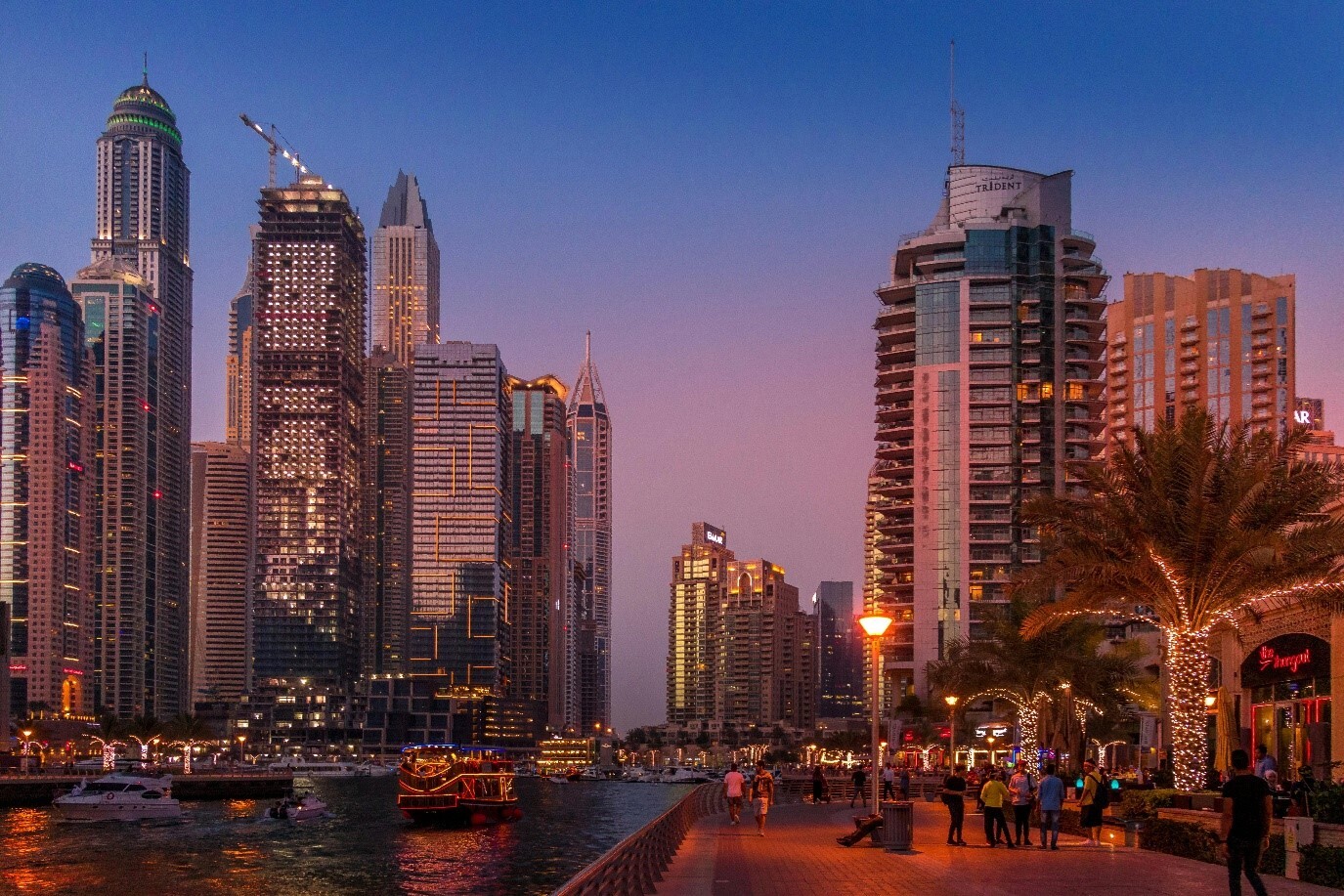
Few global cities have experienced a transformation as profound as Dubai.
In half a century, what was once a modest trading port has become one of the world’s most memorable landscapes, defined by architectural ambition and urban innovation. The story of Dubai’s real estate market is about vision, resilience, and the creation of a city that continually reinvents itself.
In half a century, what was once a modest trading port has become one of the world’s most memorable landscapes, defined by architectural ambition and urban innovation. The story of Dubai’s real estate market is about vision, resilience, and the creation of a city that continually reinvents itself.
The Foundations: 1970s
The roots of Dubai’s market can be traced back to the earliest investments in infrastructure. During the 1970s, the leaders and rulers recognized that a strong economy needed modern facilities.
In the 70s, Dubai’s airport was upgraded with a brand-new terminal building, control tower, and additional infrastructure. Furthermore, Port Rashid in Dubai became operational in 1972, marking it as the region’s first ever modern container terminal; this propelled Dubai as an international trade center.
Residential areas were planned to accommodate a growing population of expatriates, while commercial zones supported the growing trade economy. These early steps set the precedent for master-planned urban growth that would define later decades.
In the 70s, Dubai’s airport was upgraded with a brand-new terminal building, control tower, and additional infrastructure. Furthermore, Port Rashid in Dubai became operational in 1972, marking it as the region’s first ever modern container terminal; this propelled Dubai as an international trade center.
Residential areas were planned to accommodate a growing population of expatriates, while commercial zones supported the growing trade economy. These early steps set the precedent for master-planned urban growth that would define later decades.
The Iconic Era: 2000s
The 2000s were a turning point that propelled Dubai onto the global stage. This was the decade when real estate development began to shift from purely functional projects to visionary ones.
In 2002, His Highness Sheikh Mohammed Bin Rashid Al Maktoum, Vice President and Prime Minister of the United Arab Emirates and Ruler of Dubai, issued the decree to grant freehold ownership rights to non-UAE nationals; this was groundbreaking to a nation whose population stood at just 1 million at the time.
In 2007, the Real Estate Regulatory Authority (RERA) was introduced to efficiently streamline property transactions and registrations, ensuring proper transparency and eliminating risks of fraud. A year after its inception, Dubai’s real estate data was also publicised, opening the industry to a broader market.
By 2008, the foundation of the skyline was established; Dubai had witnessed the inception of Dubai Marina, Arabian Ranches, Downtown Dubai, Jumeirah Lakes Towers, and Palm Jumeirah. Man-made islands extended the city’s coastline, record-breaking skyscrapers reached new heights, and themed communities offered unprecedented lifestyle options.
In 2002, His Highness Sheikh Mohammed Bin Rashid Al Maktoum, Vice President and Prime Minister of the United Arab Emirates and Ruler of Dubai, issued the decree to grant freehold ownership rights to non-UAE nationals; this was groundbreaking to a nation whose population stood at just 1 million at the time.
In 2007, the Real Estate Regulatory Authority (RERA) was introduced to efficiently streamline property transactions and registrations, ensuring proper transparency and eliminating risks of fraud. A year after its inception, Dubai’s real estate data was also publicised, opening the industry to a broader market.
By 2008, the foundation of the skyline was established; Dubai had witnessed the inception of Dubai Marina, Arabian Ranches, Downtown Dubai, Jumeirah Lakes Towers, and Palm Jumeirah. Man-made islands extended the city’s coastline, record-breaking skyscrapers reached new heights, and themed communities offered unprecedented lifestyle options.
Dubai’s message was clear: it was a city where the extraordinary was the norm.
In 2009, the Dubai Metro was also inaugurated. Revolutionising public transport in the Middle East, diversifying transportation methods in the region and allowing residents to move around the city easily.
In an era where the global stock market crashed, Dubai was just getting started.
In an era where the global stock market crashed, Dubai was just getting started.
Resilience and Reinvention: 2010s
By this point, Dubai became synonymous with ambition, luxury, and opportunity.
Like all global markets, Dubai’s real estate sector experienced cycles of growth and correction. Regulatory frameworks were strengthened, investor protections were enhanced, and urban development strategies were recalibrated to ensure sustainability.
The city also began diversifying its offerings. Mid-market housing, affordable communities, and mixed-use developments gained prominence, reflecting the needs of a broader demographic. Dubai’s adaptability keeps it as a staple ideal destination for residents and investors.
Like all global markets, Dubai’s real estate sector experienced cycles of growth and correction. Regulatory frameworks were strengthened, investor protections were enhanced, and urban development strategies were recalibrated to ensure sustainability.
The city also began diversifying its offerings. Mid-market housing, affordable communities, and mixed-use developments gained prominence, reflecting the needs of a broader demographic. Dubai’s adaptability keeps it as a staple ideal destination for residents and investors.
Today: Innovation and Sustainability
Today, Dubai’s real estate market is characterized by maturity and forward-thinking strategies. Developments are increasingly guided by sustainability, smart technology, and community-centric planning. The city is embracing green building standards, renewable energy integration, and digital innovation; from AI-powered government procedures to smart city infrastructure.
At the same time, lifestyle remains at the heart of Dubai’s urban fabric. Integrated communities offer residents access to healthcare, education, leisure, and retail within walking distance. The emphasis is no longer solely on building iconic structures but on enhancing quality of life and creating enduring value.
At the same time, lifestyle remains at the heart of Dubai’s urban fabric. Integrated communities offer residents access to healthcare, education, leisure, and retail within walking distance. The emphasis is no longer solely on building iconic structures but on enhancing quality of life and creating enduring value.
Looking Ahead
As Dubai looks to the future, the trajectory of its real estate market remains ambitious yet grounded in experience. The focus will continue to shift toward sustainable growth, global competitiveness, and technological integration. With strategic government initiatives and evolving investor confidence, Dubai is poised to remain a benchmark city for real estate innovation worldwide.
The history of Dubai’s real estate market is a story of vision turned into reality. From its modest beginnings to its current reputation as a global icon, the city has consistently demonstrated the ability to dream big and deliver. Each era has contributed to a market that is dynamic, resilient, and ever-evolving. More than buildings, Dubai has built a future; one that continues to inspire the world.
The history of Dubai’s real estate market is a story of vision turned into reality. From its modest beginnings to its current reputation as a global icon, the city has consistently demonstrated the ability to dream big and deliver. Each era has contributed to a market that is dynamic, resilient, and ever-evolving. More than buildings, Dubai has built a future; one that continues to inspire the world.